High Protein Vegan Pumpkin Miso Ramen with Crispy Tofu, Edamame and Kale
A creamy pumpkin miso broth with garlicky shiitake, crispy cornstarch-coated tofu, edamame and kale over chewy ramen noodles. A cozy fall bowl ready in 40 minutes.
- Prep
- 15 min
- Cook
- 25 min
- Rest
- 10 min
- Serves
- 4
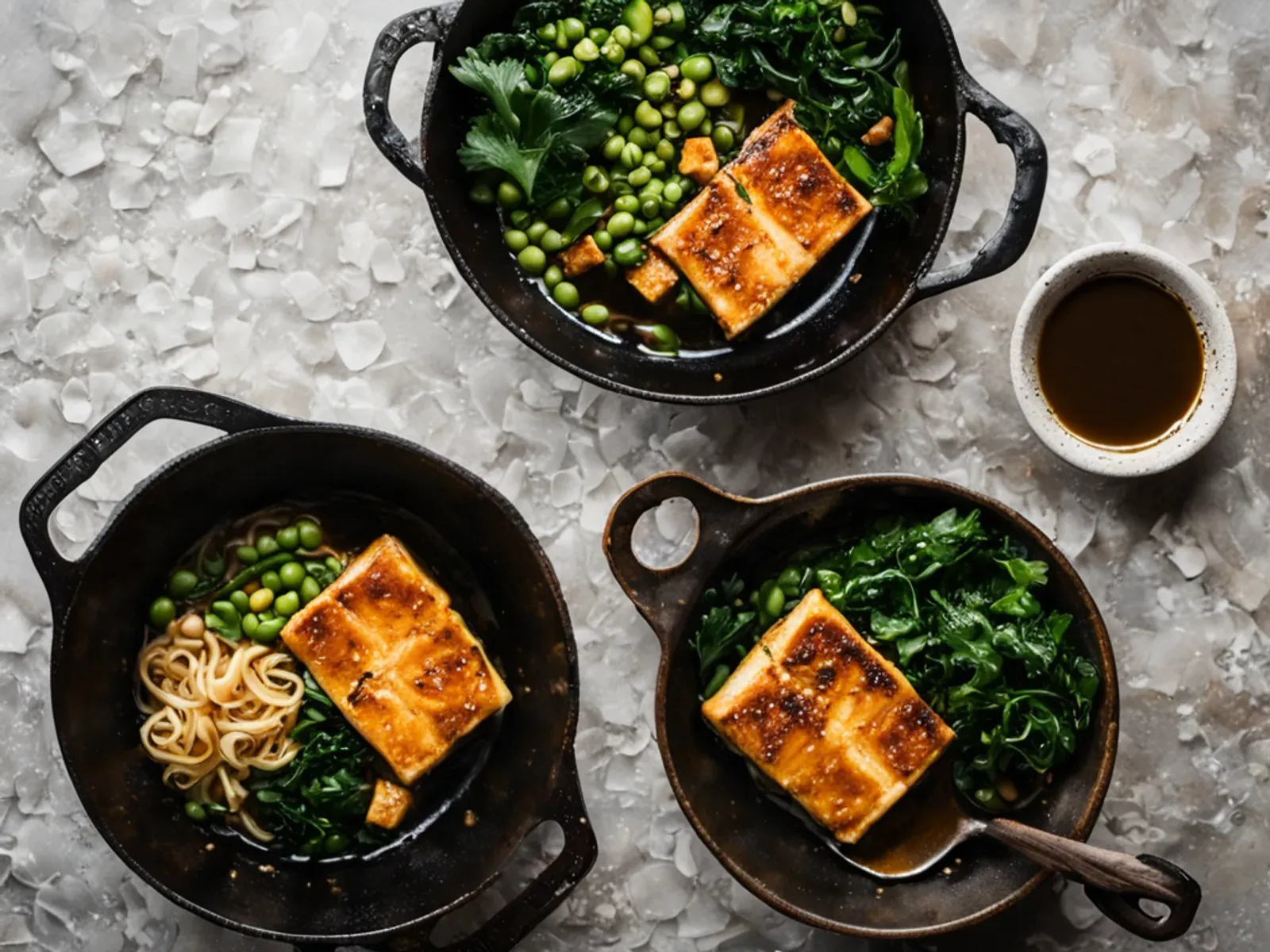
High Protein Vegan Pumpkin Miso Ramen with Crispy Tofu, Edamame and Kale is a vegan dinner recipe made with extra-firm tofu, cornstarch, soy sauce or tamari. It takes 40 minutes of hands-on time, plus 10 minutes resting, serves 4, and each serving has 756 calories, 39 g of protein and 12 g of fiber.
Canned pumpkin and soy milk turn a plain vegetable stock into a silky, golden broth. You whisk the miso in off the heat, so its savory depth stays bright. Tofu, edamame and soy milk all bring plant protein, and a quick pan-fry gives the tofu crisp edges that hold up in the broth. Cook the noodles separately and add them to each bowl just before serving so they don't go soggy.
Ingredients
Crispy tofu
- 14 oz397 gextra-firm tofu, pressed and cut into 3/4-inch cubes
- 1½ tbsp12 gcornstarch
- 1 tbsp16 gsoy sauce or tamari
- 2 tbsp28 gneutral oil
Broth
- 1 tbsp14 gtoasted sesame oil
- 6 oz170 gshiitake mushrooms, stems removed, caps sliced
- 4 cloves12 ggarlic, minced
- 1 tbsp6 gfresh ginger, finely grated
- 1 cup245 gpumpkin puree (not pie filling)
- 5 cups1.2 kglow-sodium vegetable broth
- 1 cup243 gunsweetened soy milk
- 1 tbsp16 gsoy sauce or tamari
- ¼ cup68 gwhite or yellow miso
- 2 tsp10 grice vinegar
Bowls
- 1½ cups233 gfrozen shelled edamame
- 4 cups84 glacinato kale, stems removed, leaves chopped
- 10 oz283 gdried ramen noodles (egg-free; seasoning packets discarded)
- 3 45 ggreen onions, thinly sliced (optional)
- 1 tbsp9 gtoasted sesame seeds (optional)
- 1 tbsp19 gsriracha or chili crisp, for serving (optional)
Kit: large nonstick or cast-iron skillet, large pot, medium pot, whisk
Tips
- Check the noodle package. Some fresh and dried ramen noodles contain egg, so choose ones labeled vegan or egg-free.
- Miso loses its aroma and some of its character if it boils, so always add it at the end, off the heat.
- Keep the tofu separate until serving so it stays crisp. Leftover tofu re-crisps in a 400°F oven or air fryer in 5–6 minutes.
Swap ideas
- Butternut squash puree or roasted mashed kabocha instead of pumpkin puree
- Gives a slightly sweeter, nuttier broth. Kabocha is the most traditionally Japanese option.
- Baked tempeh cubes instead of tofu
- Adds a firmer, nuttier bite. Steam or simmer the tempeh for 10 minutes first, then bake until it's cooked through and browned.
- Add 1 tbsp white miso plus 1 tsp gochujang to the broth
- Adds gentle heat and a deeper fermented flavor.
- Soba or rice noodles instead of ramen noodles
- Use 100% buckwheat soba or rice noodles plus tamari to make it gluten-free. They have a softer, less springy chew.
The numbers
Nutrition per serving
756kcal per serving
Everything else · 4 servings per recipe
- Saturated fat
- 8.9 g 45%
- Sugars
- 10.9 g
- Sodium
- 3341 mg 145%
- Potassium
- 1165 mg 25%
- Calcium
- 901 mg 69%
- Iron
- 9.3 mg 52%
- Vitamin C
- 28 mg 32%
- Vitamin B12
- 0.71 µg 30%
% Daily Value on a 2,000 calorie diet. Calculated from USDA FoodData Central values for each ingredient; optional ingredients are excluded. Estimates vary with brands and portions.
Sources: Tofu, raw, firm, prepared with calcium sulfate, Cornstarch, Soy sauce made from soy and wheat (shoyu), Oil, canola, Oil, sesame, salad or cooking, Mushrooms, shiitake, raw, Garlic, raw, Ginger root, raw, Pumpkin, canned, without salt, Soup, vegetable broth, ready to serve, Soymilk, original and vanilla, with added calcium, vitamins A and D, Miso, RICE VINEGAR (Branded, Mizkan America, Inc.) - unseasoned; 0 kcal, 0 g protein, carbs, sugar, fat and 0 mg sodium per 15 ml serving, Edamame, frozen, prepared, Kale, raw, Soup, ramen noodle, any flavor, dry (USDA SR Legacy). Note: values are for the whole dry product, so sodium is probably overstated for noodles with the seasoning packet discarded. The 81 g package weight comes from a mirror page and is unconfirmed.
Method
Press the tofu between towels under a heavy pan for 10 minutes, then cut it into 3/4-inch cubes. Toss the cubes with 1 tbsp soy sauce, then with the cornstarch until they're evenly coated.
Heat the neutral oil in a large nonstick or cast-iron skillet over medium-high heat. Add the tofu in a single layer and cook, turning every 2–3 minutes, until it's golden and crisp on most sides, 10–12 minutes. Move it to a plate.
Meanwhile, bring a medium pot of water to a boil for the noodles. In a large pot, heat the sesame oil over medium heat. Add the shiitake and cook, stirring now and then, until softened and browned at the edges, 4–5 minutes. Add the garlic and ginger and stir until fragrant, about 1 minute.
Stir in the pumpkin puree and cook for 1 minute. Gradually whisk in the vegetable broth, soy milk and 1 tbsp soy sauce until smooth. Bring to a gentle simmer, but don't let it boil hard or the soy milk may separate.
Add the edamame and kale to the broth and simmer until the edamame is hot and the kale is tender and bright green, 3–4 minutes.
Cook the noodles in the boiling water according to the package directions, usually 3–4 minutes, until just tender. Drain and rinse briefly under warm water to remove excess starch.
Take the broth off the heat. Whisk the miso with a ladleful of hot broth in a small bowl until smooth, then stir it back into the pot along with the rice vinegar. Taste and add more soy sauce or miso if it needs more salt.
Divide the noodles among 4 deep bowls and ladle the broth, vegetables and mushrooms over them. Top with the crispy tofu, green onions, sesame seeds and a drizzle of sriracha or chili crisp, if using. Serve right away.
Storage: Store the broth with its vegetables, the noodles and the tofu in separate airtight containers in the fridge for up to 4 days. Rewarm the broth gently over medium-low heat without boiling. Briefly dip the noodles in hot water, and re-crisp the tofu in a hot oven or air fryer. The broth (without the kale) freezes for up to 3 months.
Questions
- How much protein is in high protein vegan pumpkin miso ramen with crispy tofu, edamame and kale?
- Each of the 4 servings has 39 g of protein, 12 g of fiber and 756 calories, calculated from USDA FoodData Central values for every ingredient.
- Is high protein vegan pumpkin miso ramen with crispy tofu, edamame and kale vegan?
- Yes. It contains no dairy, eggs, honey or other animal products.
- How long does high protein vegan pumpkin miso ramen with crispy tofu, edamame and kale take to make?
- 15 minutes of prep and 25 minutes of cooking, so 40 minutes of hands-on time, plus 10 minutes of unattended resting.
- Can you make high protein vegan pumpkin miso ramen with crispy tofu, edamame and kale ahead?
- Store the broth with its vegetables, the noodles and the tofu in separate airtight containers in the fridge for up to 4 days. Rewarm the broth gently over medium-low heat without boiling. Briefly dip the noodles in hot water, and re-crisp the tofu in a hot oven or air fryer. The broth (without the kale) freezes for up to 3 months.
- What can I substitute in high protein vegan pumpkin miso ramen with crispy tofu, edamame and kale?
- Butternut squash puree or roasted mashed kabocha instead of pumpkin puree — gives a slightly sweeter, nuttier broth. kabocha is the most traditionally japanese option.. Baked tempeh cubes instead of tofu — adds a firmer, nuttier bite. steam or simmer the tempeh for 10 minutes first, then bake until it's cooked through and browned.. Add 1 tbsp white miso plus 1 tsp gochujang to the broth — adds gentle heat and a deeper fermented flavor.. Soba or rice noodles instead of ramen noodles — use 100% buckwheat soba or rice noodles plus tamari to make it gluten-free. they have a softer, less springy chew..
- Does high protein vegan pumpkin miso ramen with crispy tofu, edamame and kale contain gluten or peanuts?
- Yes — the ingredient list includes gluten and peanuts, in some cases as an optional ingredient you can leave out. Check the labels on the products you buy if you're cooking for an allergy.
Nutrition is calculated from USDA data for every ingredient — how we work it out.
Published October 23, 2026 ·Japanese-inspired