Creamy Gochujang Butternut Squash Pasta with Crispy Shiitake and Sesame
Gochujang butternut squash pasta with a silky roasted squash and miso sauce, soy-glazed crispy shiitake, toasted sesame and green onion. Spicy-sweet and dairy-free.
- Prep
- 15 min
- Cook
- 35 min
- Serves
- 4
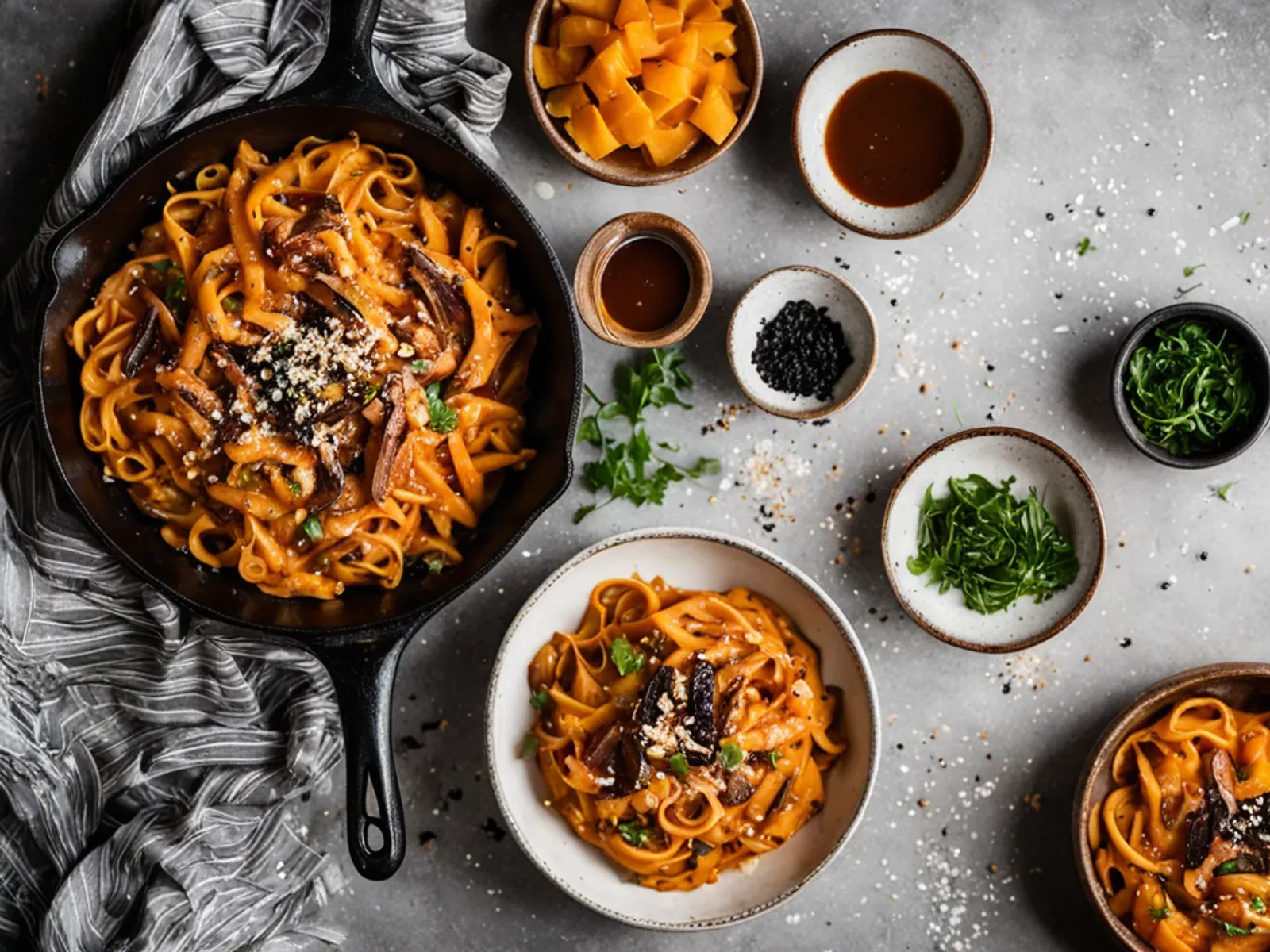
Creamy Gochujang Butternut Squash Pasta with Crispy Shiitake and Sesame is a vegan dinner recipe made with butternut squash, garlic cloves, olive oil. It takes 50 minutes of hands-on time, serves 4, and each serving has 672 calories, 18 g of protein and 9 g of fiber.
Roasting the squash and garlic first browns them and deepens their flavor, so the blended sauce tastes savory instead of flat and sweet. Gochujang brings heat and a slight funk. Miso adds a cheesy kind of savoriness, and a splash of rice vinegar balances the sweetness. The shiitake are seared hard in a single layer and glazed with soy sauce only at the end, so their edges stay crisp and contrast with the creamy sauce.
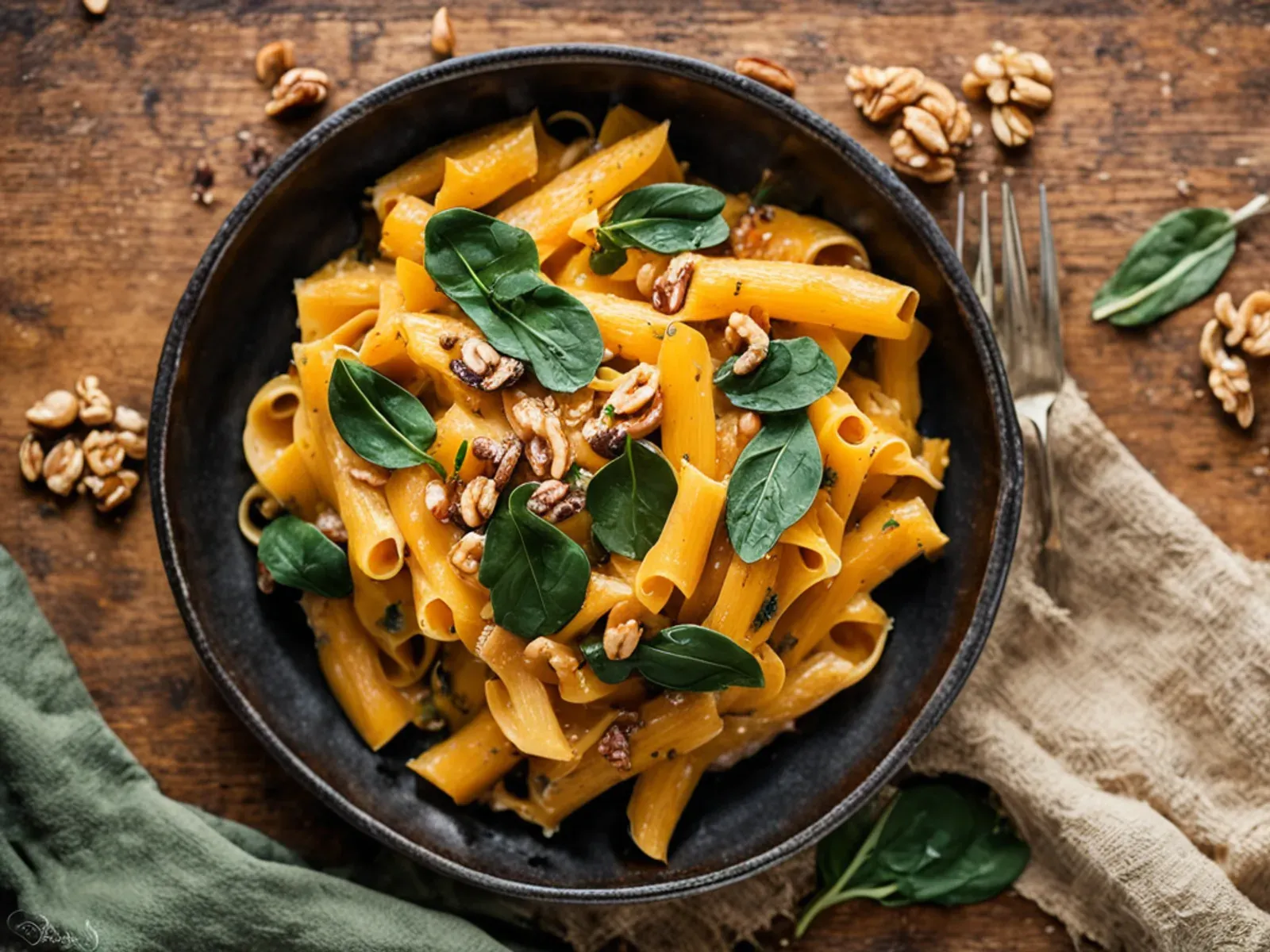
A flavor profile + cuisine (Korean-inspired spicy-sweet gochujang and miso butternut sauce with seared shiitake and sesame instead of mild sage, spinach and walnut) take on our One-Pot Creamy Butternut Squash Pasta with Spinach, Sage and Toasted Walnuts.
Ingredients
Gochujang squash sauce
- 4 cups560 gbutternut squash, peeled and cut into 1-inch cubes (from about a 2 lb squash)
- 5 cloves15 ggarlic cloves, unpeeled
- 2 tbsp27 golive oil
- ½ tsp3 gfine salt, for roasting
- 1 cup240 gunsweetened oat milk
- 3 tbsp60 ggochujang (check the label for vegan), Use 2 tbsp for milder heat
- 2 tbsp34 gwhite or yellow miso
- 1 tbsp16 gsoy sauce
- 1 tbsp20 gmaple syrup
- 1 tbsp15 grice vinegar
- 2 tsp9.1 gtoasted sesame oil
Crispy shiitake
- 8 oz227 gshiitake mushrooms, stems removed, caps sliced 1/4 inch thick
- 2 tbsp28 gneutral oil (such as avocado or canola)
- 2 tsp11 gsoy sauce
Pasta
- 12 oz340 grigatoni or other short tube pasta
- 1 tbsp18 gsalt, for the pasta water
- 1½ cups356 greserved starchy pasta water, You will use about 1/2 to 1 cup
To serve
- 2 tbsp18 gsesame seeds
- 3 45 ggreen onions, thinly sliced
- ¼ tsp0.5 gred pepper flakes, for extra heat (optional)
- 1 65 glime, cut into wedges (optional)
Kit: rimmed baking sheet, large pot, large skillet, blender
Tips
- Give the shiitake plenty of room in the pan. If they're crowded, they steam and turn soft instead of crisp, so cook them in two batches if your skillet is small.
- Gochujang brands vary a lot in heat and sweetness. Start with 2 tbsp, taste the blended sauce and add more from there.
- You can blend the sauce up to 3 days ahead and keep it in the fridge. Thin it with hot pasta water when you reheat it.
Swap ideas
- Use 3/4 cup canned light coconut milk plus 1/4 cup water instead of the oat milk
- The sauce is richer and rounder, with a light coconut note that softens the gochujang's heat.
- Use kabocha squash or sweet potato instead of the butternut squash
- Kabocha makes a thicker, nuttier sauce, and sweet potato makes a sweeter one. Add a little more vinegar to balance either.
- Use tamari instead of the soy sauce and gluten-free pasta instead of the rigatoni
- Makes the dish gluten-free. Check that your gochujang and miso are gluten-free too, since many brands contain wheat or barley.
- Use cubed extra-firm tofu or oyster mushrooms instead of the shiitake
- Tofu makes the topping heartier. Oyster mushrooms crisp up even more but have a milder flavor.
The numbers
Nutrition per serving
672kcal per serving
Everything else · 4 servings per recipe
- Saturated fat
- 2.6 g 13%
- Sugars
- 16.1 g
- Sodium
- 3168 mg 138%
- Potassium
- 1076 mg 23%
- Calcium
- 247 mg 19%
- Iron
- 5.3 mg 29%
- Vitamin C
- 33 mg 36%
- Vitamin B12
- 0.1 µg 4%
% Daily Value on a 2,000 calorie diet. Calculated from USDA FoodData Central values for each ingredient; optional ingredients are excluded. Estimates vary with brands and portions.
Sources: Squash, winter, butternut, raw, Garlic, raw, Oil, olive, salad or cooking, Salt, table, Oatly Original Oatmilk (Nutrition Facts per 1 cup / 240 ml: 120 kcal, 5 g fat, 0.5 g sat fat, 100 mg sodium, 16 g carbs, 2 g fiber, 7 g sugars, 3 g protein, 350 mg calcium, 0.3 mg iron, 390 mg potassium, 0.4 mcg B12). Converted to per 100 g assuming ~244 g per cup (density ≈ 1.02 g/mL); vitamin C not listed, treated as 0., Gochujang Korean chilli paste, Sempio (Open Food Facts, per-100g label values; vegan-labelled; contains wheat extract and soybean). Potassium, calcium, iron, vitamin C and B12 are not on the label, so they are set to 0 rather than measured., Miso, Soy sauce made from soy and wheat (shoyu), Syrups, maple, RICE VINEGAR (Branded, Mizkan America, Inc.) - unseasoned; 0 kcal, 0 g protein, carbs, sugar, fat and 0 mg sodium per 15 ml serving, Oil, sesame, salad or cooking, Mushrooms, shiitake, raw, Oil, canola, Pasta, dry, enriched, Beverages, water, tap, drinking, Seeds, sesame seeds, whole, dried, Onions, spring or scallions (includes tops and bulb), raw
Method
Heat the oven to 425°F. On a rimmed baking sheet, toss the squash cubes with the olive oil and 1/2 tsp salt, then spread them in a single layer. Tuck the unpeeled garlic cloves among the squash. Roast for 25–30 minutes, flipping halfway, until the squash is fork-tender and browned at the edges and the garlic feels soft when squeezed.
While the squash roasts, bring a large pot of water to a boil and add 1 tbsp salt. Toast the sesame seeds in a dry large skillet over medium heat, shaking often, until golden and fragrant, 2–3 minutes. Tip them onto a plate.
In the same skillet, heat the neutral oil over medium-high heat until it shimmers. Add the shiitake in a single layer and leave them alone for 4 minutes so they brown. Stir, then cook for another 4–5 minutes, until deep golden and crisp at the edges. Take the pan off the heat, add 2 tsp soy sauce and toss for about 30 seconds, until the soy sauce is absorbed. Move the mushrooms to a plate and set the skillet aside.
Cook the pasta about 1 minute short of the package time for al dente. Before draining, scoop out 1 1/2 cups of the starchy cooking water.
Squeeze the roasted garlic from its skins into a blender. Add the roasted squash, oat milk, gochujang, miso, 1 tbsp soy sauce, maple syrup, rice vinegar and sesame oil. Blend until completely smooth, about 1 minute. Taste the sauce. If it's too sweet, add a splash more vinegar. For more heat, add more gochujang.
Pour the sauce into the pasta pot or the skillet over medium-low heat. Add the drained pasta and 1/2 cup of the pasta water. Toss for about 2 minutes, until the sauce is glossy and clings to the pasta. Add more pasta water a splash at a time if it gets thick. Keep it at a gentle simmer, not a hard boil, so the miso keeps its flavor.
Divide the pasta among bowls. Top with the crispy shiitake, toasted sesame seeds and green onions, plus red pepper flakes and a lime wedge if you like. Serve right away.
Storage: Keep the sauced pasta in an airtight container in the fridge for up to 4 days. Store the shiitake and sesame separately. Reheat the pasta in a pan with a splash of water or plant milk to loosen the sauce. Re-crisp the mushrooms in a hot dry skillet for 1–2 minutes. The sauce on its own freezes well for up to 3 months.
Questions
- How much protein is in creamy gochujang butternut squash pasta with crispy shiitake and sesame?
- Each of the 4 servings has 18 g of protein, 9 g of fiber and 672 calories, calculated from USDA FoodData Central values for every ingredient.
- Is creamy gochujang butternut squash pasta with crispy shiitake and sesame vegan?
- Yes. It contains no dairy, eggs, honey or other animal products.
- How long does creamy gochujang butternut squash pasta with crispy shiitake and sesame take to make?
- 15 minutes of prep and 35 minutes of cooking, so 50 minutes of hands-on time.
- Can you make creamy gochujang butternut squash pasta with crispy shiitake and sesame ahead?
- Keep the sauced pasta in an airtight container in the fridge for up to 4 days. Store the shiitake and sesame separately. Reheat the pasta in a pan with a splash of water or plant milk to loosen the sauce. Re-crisp the mushrooms in a hot dry skillet for 1–2 minutes. The sauce on its own freezes well for up to 3 months.
- What can I substitute in creamy gochujang butternut squash pasta with crispy shiitake and sesame?
- Use 3/4 cup canned light coconut milk plus 1/4 cup water instead of the oat milk — the sauce is richer and rounder, with a light coconut note that softens the gochujang's heat.. Use kabocha squash or sweet potato instead of the butternut squash — kabocha makes a thicker, nuttier sauce, and sweet potato makes a sweeter one. add a little more vinegar to balance either.. Use tamari instead of the soy sauce and gluten-free pasta instead of the rigatoni — makes the dish gluten-free. check that your gochujang and miso are gluten-free too, since many brands contain wheat or barley.. Use cubed extra-firm tofu or oyster mushrooms instead of the shiitake — tofu makes the topping heartier. oyster mushrooms crisp up even more but have a milder flavor..
- Does creamy gochujang butternut squash pasta with crispy shiitake and sesame contain gluten?
- Yes — the ingredient list includes gluten. Check the labels on the products you buy if you're cooking for an allergy.
Nutrition is calculated from USDA data for every ingredient — how we work it out.
Published October 21, 2026 ·Korean-American fusion