20-Minute Vegan Egg Roll in a Bowl with Crumbled Tofu, Cabbage and Shiitake
Vegan egg roll in a bowl made in one skillet: browned tofu crumbles, seared shiitake and crisp-tender cabbage in a gingery tamari sauce. Ready in 20 minutes.
- Prep
- 8 min
- Cook
- 12 min
- Serves
- 4
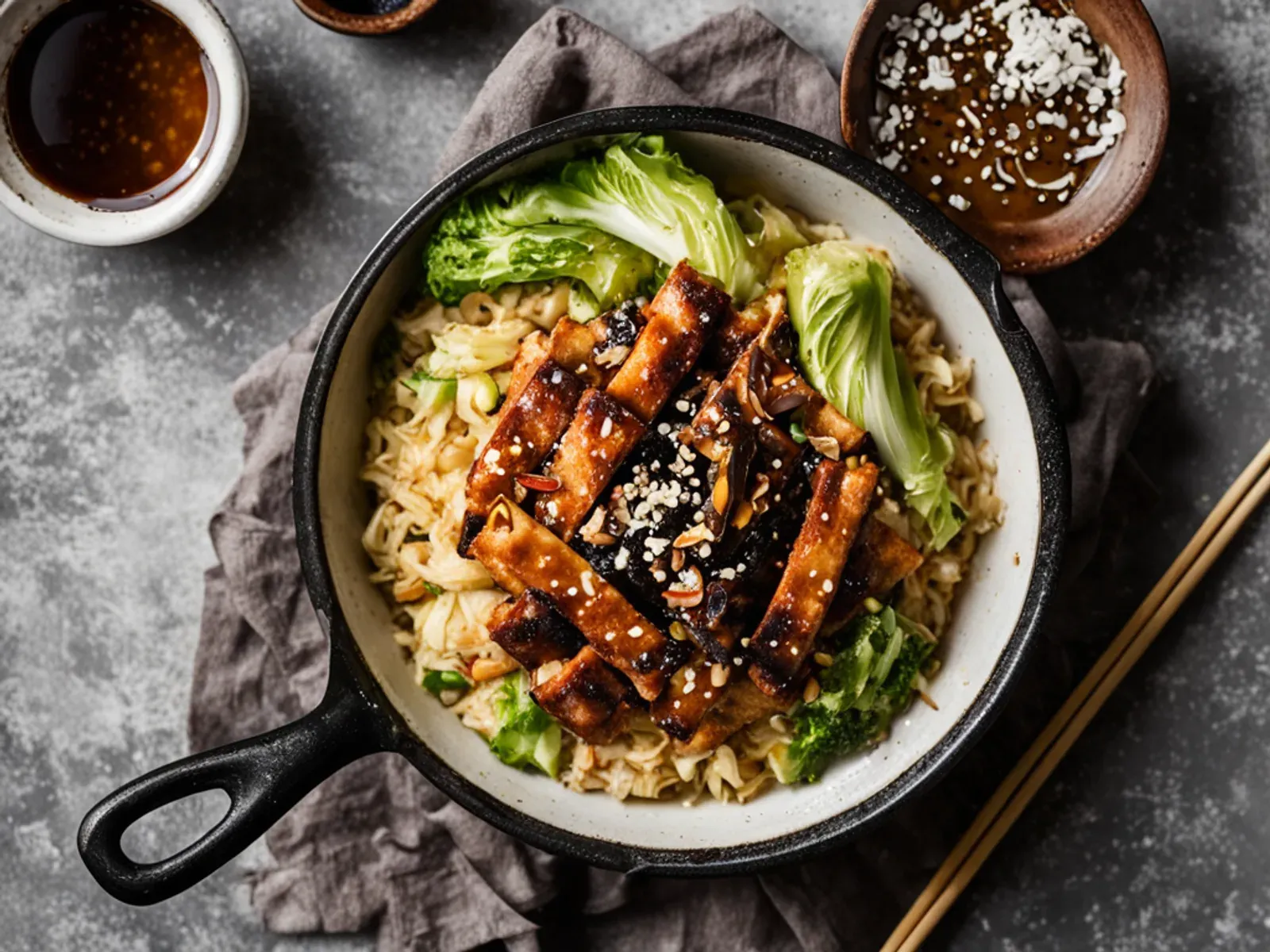
20-Minute Vegan Egg Roll in a Bowl with Crumbled Tofu, Cabbage and Shiitake is a vegan dinner recipe made with tamari, unseasoned rice vinegar, toasted sesame oil. It takes 20 minutes of hands-on time, serves 4, and each serving has 329 calories, 23 g of protein and 9 g of fiber.
All the filling of an egg roll, minus the wrapper and the frying. The tofu is crumbled and browned on its own first so it turns chewy and golden instead of steaming, and the shiitake get the same treatment for a savory, meaty depth. The cabbage goes in last over high heat for just a few minutes so it wilts but keeps some crunch, and the sauce is stirred in at the very end so nothing turns soggy.
Ingredients
Sauce
- 3 tbsp54 gtamari
- 1 tbsp15 gunseasoned rice vinegar
- 2 tsp9.1 gtoasted sesame oil
- 2 tsp13 gsriracha, plus more to taste
- 1 tsp6.7 gmaple syrup
Skillet
- 2 tbsp28 gneutral oil, divided
- 14 oz397 gfirm or extra-firm tofu, drained and patted very dry
- 5 oz142 gfresh shiitake mushrooms, stems removed, caps thinly sliced
- 4 60 ggreen onions, thinly sliced, white and green parts separated
- 3 cloves9 ggarlic, minced
- 1 tbsp6 gfresh ginger, finely grated
- 5 cups445 ggreen cabbage, cored and thinly shredded (about 1/2 small head)
- 2 cups178 gred cabbage, thinly shredded
- 2 medium122 gcarrots, coarsely grated or cut into matchsticks
- ¼ tsp1.5 gfine salt, or to taste
To serve
- 1 tbsp9 gtoasted sesame seeds
- 2 tsp13 gextra sriracha, for drizzling (optional)
- 3 cups606 gcooked brown rice, for serving (optional)
Kit: 12-inch skillet or wok, small bowl, box grater
Tips
- Dry the tofu well. Squeeze the block firmly between clean kitchen towels for 30 seconds; no long pressing needed, but surface water will make it steam instead of brown.
- Use the largest skillet you have. Seven cups of raw cabbage looks like a lot, but it collapses quickly, and a wide pan keeps it searing rather than stewing.
- Shiitake stems are too tough to eat here. Twist them off and save them in the freezer for broth.
- For gluten-free bowls, check that your tamari is labeled gluten-free; not all brands are.
Swap ideas
- Use a 14 oz bag of coleslaw mix in place of the green cabbage, red cabbage and carrots
- Cuts prep to almost nothing; the finer shreds cook in about 2 to 3 minutes, so pull it earlier.
- Use cremini or button mushrooms instead of shiitake
- Milder and less savory, and they release more water, so give them an extra 1 to 2 minutes to brown.
- Use soy sauce instead of tamari
- Slightly sharper and saltier; start with 2 1/2 tablespoons and adjust. The dish will no longer be gluten-free.
- Swap the sriracha in the sauce for 1/4 teaspoon white pepper
- Gives a gentler, classic egg roll warmth without the chili heat; pass hot sauce at the table.
The numbers
Nutrition per serving
329kcal per serving
Everything else · 4 servings per recipe
- Saturated fat
- 2.3 g 12%
- Sugars
- 9.7 g
- Sodium
- 1040 mg 45%
- Potassium
- 847 mg 18%
- Calcium
- 795 mg 61%
- Iron
- 4.7 mg 26%
- Vitamin C
- 73 mg 81%
- Vitamin B12
- 0 µg 0%
% Daily Value on a 2,000 calorie diet. Calculated from USDA FoodData Central values for each ingredient; optional ingredients are excluded. Estimates vary with brands and portions.
Sources: Soy sauce made from soy (tamari), RICE VINEGAR (Branded, Mizkan America, Inc.) - unseasoned; 0 kcal, 0 g protein, carbs, sugar, fat and 0 mg sodium per 15 ml serving, Oil, sesame, salad or cooking, Sauce, hot chile, sriracha, Syrups, maple, Oil, canola, Tofu, raw, firm, prepared with calcium sulfate, Mushrooms, shiitake, raw, Onions, spring or scallions (includes tops and bulb), raw, Garlic, raw, Ginger root, raw, Cabbage, raw, Cabbage, red, raw, Carrots, raw, Salt, table, Seeds, sesame seeds, whole, dried
Method
Whisk the tamari, rice vinegar, toasted sesame oil, 2 teaspoons sriracha and maple syrup together in a small bowl. Set the sauce next to the stove along with all the prepped vegetables, since the cooking moves fast.
Heat 1 tablespoon of the neutral oil in a 12-inch skillet or wok over medium-high heat until it shimmers. Crumble the tofu in with your hands in pieces about the size of a pea to a small grape, spread it into an even layer and leave it alone for 2 minutes so the underside browns.
Stir the tofu, then keep cooking, stirring only every minute or so, until most of the moisture has cooked off and the crumbles are golden and a little chewy at the edges, 3 to 4 minutes more. Splash in 1 tablespoon of the sauce, toss for 15 seconds until absorbed, and scrape the tofu onto a plate.
Add the remaining 1 tablespoon oil to the same skillet. Add the shiitake in a single layer and cook, stirring once or twice, until they have shrunk and browned at the edges, about 2 minutes.
Add the white parts of the green onions, the garlic and the ginger. Stir constantly until fragrant, about 30 seconds, without letting the garlic darken.
Turn the heat to high and add the green cabbage, red cabbage, carrots and salt. Toss continuously until the cabbage has wilted to roughly half its volume and is crisp-tender with a few charred spots, 3 to 4 minutes. It should still have some bite.
Return the tofu to the skillet and pour in the remaining sauce. Toss until everything is evenly coated and hot and the liquid has mostly been absorbed, about 1 minute. Taste and add a little more tamari or sriracha if you like.
Take the skillet off the heat and stir in half of the green onion tops. Divide among bowls, over rice if using, and finish with sesame seeds, the remaining green onion tops and an extra drizzle of sriracha.
Storage: Cool and refrigerate in an airtight container for up to 4 days; the cabbage softens a little but holds up well. Reheat in a hot skillet for 2 to 3 minutes or microwave until steaming. Store rice separately, and add the sesame seeds and fresh green onion after reheating. Freezing is not recommended, as the cabbage turns watery.
Questions
- How much protein is in 20-minute vegan egg roll in a bowl with crumbled tofu, cabbage and shiitake?
- Each of the 4 servings has 23 g of protein, 9 g of fiber and 329 calories, calculated from USDA FoodData Central values for every ingredient.
- Is 20-minute vegan egg roll in a bowl with crumbled tofu, cabbage and shiitake vegan?
- Yes. It contains no dairy, eggs, honey or other animal products.
- How long does 20-minute vegan egg roll in a bowl with crumbled tofu, cabbage and shiitake take to make?
- 8 minutes of prep and 12 minutes of cooking, so 20 minutes of hands-on time.
- Can you make 20-minute vegan egg roll in a bowl with crumbled tofu, cabbage and shiitake ahead?
- Cool and refrigerate in an airtight container for up to 4 days; the cabbage softens a little but holds up well. Reheat in a hot skillet for 2 to 3 minutes or microwave until steaming. Store rice separately, and add the sesame seeds and fresh green onion after reheating. Freezing is not recommended, as the cabbage turns watery.
- What can I substitute in 20-minute vegan egg roll in a bowl with crumbled tofu, cabbage and shiitake?
- Use a 14 oz bag of coleslaw mix in place of the green cabbage, red cabbage and carrots — cuts prep to almost nothing; the finer shreds cook in about 2 to 3 minutes, so pull it earlier.. Use cremini or button mushrooms instead of shiitake — milder and less savory, and they release more water, so give them an extra 1 to 2 minutes to brown.. Use soy sauce instead of tamari — slightly sharper and saltier; start with 2 1/2 tablespoons and adjust. the dish will no longer be gluten-free.. Swap the sriracha in the sauce for 1/4 teaspoon white pepper — gives a gentler, classic egg roll warmth without the chili heat; pass hot sauce at the table..
- Does 20-minute vegan egg roll in a bowl with crumbled tofu, cabbage and shiitake contain gluten or nuts?
- None of the ingredients are a source of gluten, tree nuts or peanuts. That is a statement about the ingredient list, not a guarantee about the brands you buy — always read the labels if you're cooking for an allergy.
Nutrition is calculated from USDA data for every ingredient — how we work it out.
Published October 21, 2026 ·Chinese-American