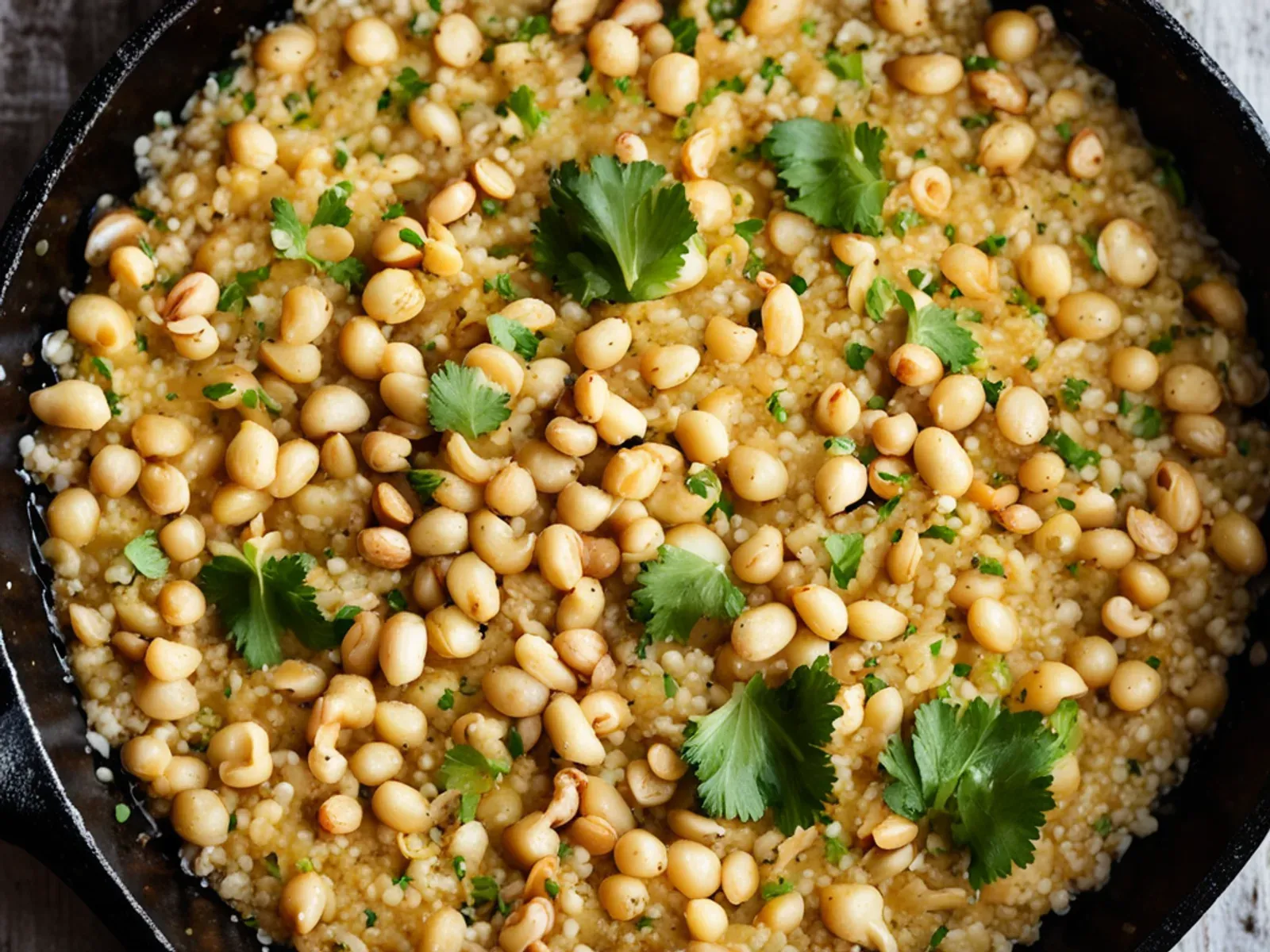
One-Pot Moong Dal Khichdi with Butternut Squash, Spinach and Cumin Tadka
Creamy one-pot moong dal khichdi with basmati rice, sweet butternut squash and spinach, finished with a sizzling cumin and coconut oil tadka for cozy fall dinners.
- Prep
- 15 min
- Cook
- 35 min
- Rest
- 30 min
- Serves
- 4
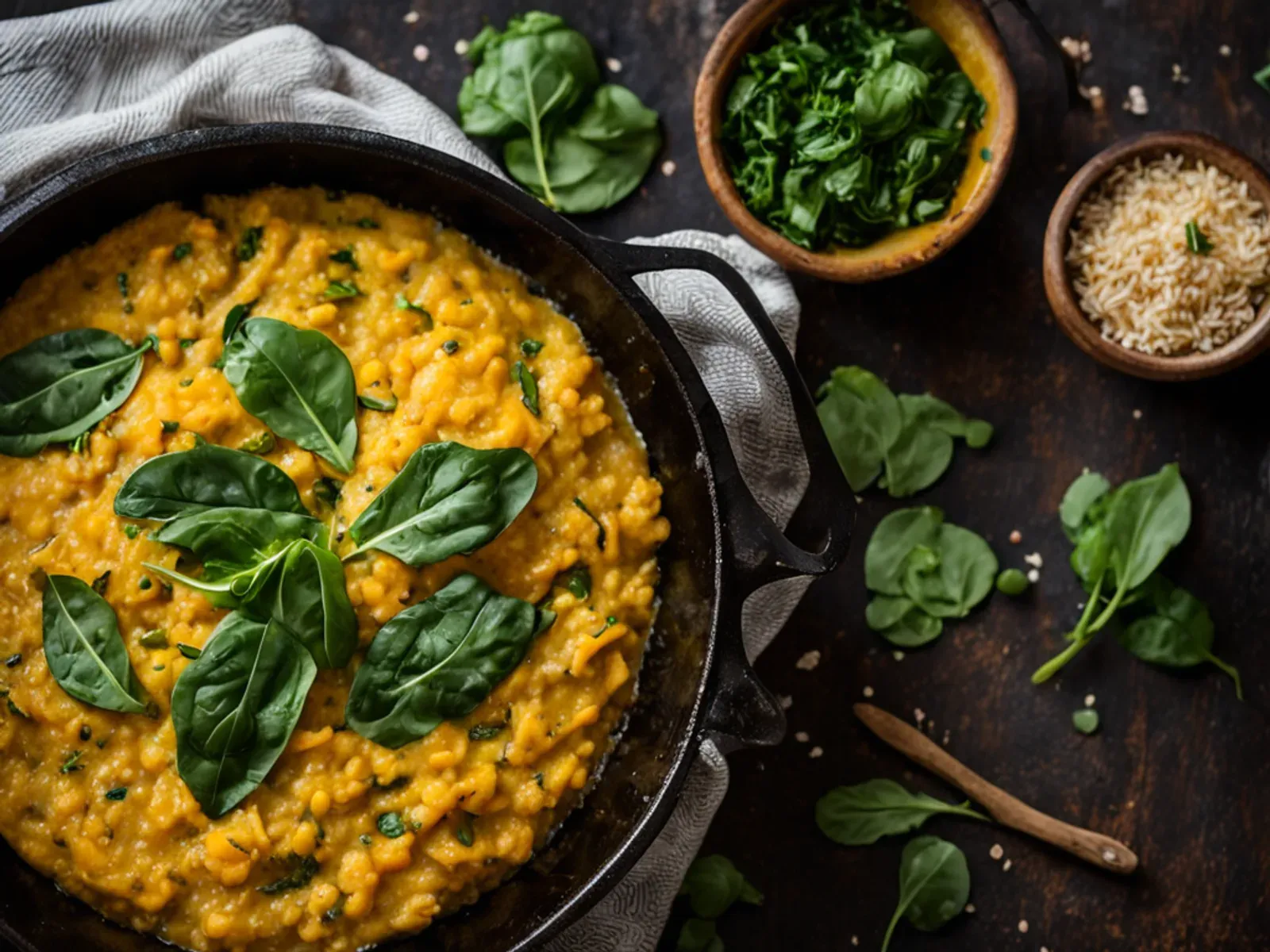
One-Pot Moong Dal Khichdi with Butternut Squash, Spinach and Cumin Tadka is a vegan dinner recipe made with split yellow moong dal, basmati rice, coconut oil. It takes 50 minutes of hands-on time, plus 30 minutes resting, serves 4, and each serving has 438 calories, 14 g of protein and 10 g of fiber.
Split yellow moong dal cooks at about the same pace as basmati rice, so both go into one pot and turn soft and porridge-like together. The butternut squash goes in with the rice and dal so it partly melts into the khichdi and sweetens it, and the spinach is stirred in at the very end so it stays bright. A last spoonful of cumin, ginger and chili sizzled in coconut oil adds the toasty, aromatic flavor that makes the bowl taste finished.
A base ingredients + meal type (a cozy one-pot dinner of rice and split yellow moong dal with butternut squash and spinach, instead of a light Navratri fasting snack of sabudana pearls, peanuts and potato) take on our Fluffy Sabudana Khichdi with Peanuts, Potato and Lime.
Ingredients
Khichdi
- ¾ cup155 gsplit yellow moong dal
- ¾ cup139 gbasmati rice, uncooked
- 2 tbsp27 gcoconut oil
- 1 tsp2.1 gcumin seeds
- 1 medium110 gyellow onion, finely diced
- 1 tbsp6 gfresh ginger, finely grated
- 3 cloves9 ggarlic, minced
- 1 tsp3 gground turmeric
- 2½ cups350 gbutternut squash, peeled and cut into 1/2-inch cubes
- 6 cups1.42 kgwater, plus more as needed
- 1½ tsp9 gfine salt
- 4 cups120 gbaby spinach, roughly chopped
- 1 tbsp15 gfresh lime juice
Tadka
- 1½ tbsp20 gcoconut oil
- 1 tsp2.1 gcumin seeds
- 1 14 gjalapeño, thinly sliced (seeded for less heat)
- 10 1 gfresh curry leaves (optional)
- ½ tsp0.9 gKashmiri chili powder
- 2 tbsp2 gfresh cilantro, chopped, for serving (optional)
- 1 65 glime wedges, for serving (optional)
Kit: large heavy-bottomed pot with lid, small skillet or tadka pan, fine-mesh strainer
Tips
- Stir the pot regularly, scraping the bottom. Moong dal is starchy and catches easily once it breaks down.
- Expect the khichdi to thicken a lot as it cools. Make it a little looser than you want to serve it.
- Make the tadka just before serving so the cumin and chili oil are still sizzling when they hit the pot.
Swap ideas
- Use sweet potato or pumpkin instead of butternut squash
- Sweet potato makes it a little sweeter and denser; pumpkin breaks down faster and makes the khichdi creamier.
- Use chopped kale instead of spinach
- Gives a sturdier, slightly bitter green. Add it 5 minutes before the end so it softens.
- Add 1/2 tsp mustard seeds to the tadka with the cumin
- Adds a nutty, sharper flavor like a South Indian tempering.
- Use neutral oil instead of coconut oil
- Tastes cleaner and more neutral, so the cumin and ginger stand out more.
The numbers
Nutrition per serving
438kcal per serving
Everything else · 4 servings per recipe
- Saturated fat
- 10.1 g 51%
- Sugars
- 6.1 g
- Sodium
- 925 mg 40%
- Potassium
- 1107 mg 24%
- Calcium
- 167 mg 13%
- Iron
- 6.8 mg 38%
- Vitamin C
- 37 mg 41%
- Vitamin B12
- 0 µg 0%
% Daily Value on a 2,000 calorie diet. Calculated from USDA FoodData Central values for each ingredient; optional ingredients are excluded. Estimates vary with brands and portions.
Sources: Mung beans, mature seeds, raw (USDA SR Legacy; values read via getfoodfacts.com mirror, as the FDC page itself is JS-rendered and could not be fetched), Rice, white, long-grain, regular, raw, enriched, Oil, coconut, Spices, cumin seed, Onions, raw, Ginger root, raw, Garlic, raw, Spices, turmeric, ground, Squash, winter, butternut, raw, Beverages, water, tap, drinking, Salt, table, Spinach, raw, Lime juice, raw, Peppers, jalapeno, raw, Spices, pepper, red or cayenne (SR Legacy; used as proxy for pure ground red chili, since USDA 'chili powder' is a salted spice blend)
Method
Put the moong dal and basmati rice in a fine-mesh strainer and rinse under cool running water, rubbing them gently, until the water runs mostly clear. Tip into a bowl, cover with fresh water and soak for 30 minutes, then drain well.
Warm 2 tbsp coconut oil in a large heavy-bottomed pot over medium heat. Add 1 tsp cumin seeds and let them sizzle until a shade darker and fragrant, about 30 seconds.
Add the onion and cook, stirring often, until soft and turning golden at the edges, 5–6 minutes. Stir in the ginger, garlic and turmeric and cook until the raw garlic smell is gone, about 1 minute.
Add the drained dal and rice and the squash cubes, and stir for 1 minute to coat everything in the spiced oil. Pour in 6 cups water and the salt and bring to a boil over high heat, skimming off any foam that rises.
Reduce the heat to low, cover with the lid slightly ajar, and simmer, stirring every 5 minutes and scraping the bottom, until the dal has broken down, the rice is very soft and the squash crushes easily against the side of the pot, 22–25 minutes. If it gets thicker than loose porridge or starts catching, stir in hot water ½ cup at a time.
Stir in the spinach and cook until just wilted, 1–2 minutes. Turn off the heat, stir in the lime juice, then taste and adjust the salt. The khichdi should be thick but still spoonable, since it firms up as it stands.
For the tadka, heat 1½ tbsp coconut oil in a small skillet over medium-high heat. Add 1 tsp cumin seeds and, once they sizzle, the jalapeño and curry leaves (if using; they will spatter). Fry until the leaves are crisp, 30–45 seconds, then take off the heat and stir in the Kashmiri chili powder.
Pour the hot tadka over the khichdi right away. Ladle into bowls and top with cilantro and lime wedges if you like.
Storage: Cool, then refrigerate in an airtight container for up to 4 days. It sets firm in the fridge, so reheat on the stove or in the microwave with a splash of hot water, stirring until creamy again. For the best flavor, make a fresh tadka when you serve it. Freezes for up to 2 months; the spinach will soften further.
Questions
- How much protein is in one-pot moong dal khichdi with butternut squash, spinach and cumin tadka?
- Each of the 4 servings has 14 g of protein, 10 g of fiber and 438 calories, calculated from USDA FoodData Central values for every ingredient.
- Is one-pot moong dal khichdi with butternut squash, spinach and cumin tadka vegan?
- Yes. It contains no dairy, eggs, honey or other animal products.
- How long does one-pot moong dal khichdi with butternut squash, spinach and cumin tadka take to make?
- 15 minutes of prep and 35 minutes of cooking, so 50 minutes of hands-on time, plus 30 minutes of unattended resting.
- Can you make one-pot moong dal khichdi with butternut squash, spinach and cumin tadka ahead?
- Cool, then refrigerate in an airtight container for up to 4 days. It sets firm in the fridge, so reheat on the stove or in the microwave with a splash of hot water, stirring until creamy again. For the best flavor, make a fresh tadka when you serve it. Freezes for up to 2 months; the spinach will soften further.
- What can I substitute in one-pot moong dal khichdi with butternut squash, spinach and cumin tadka?
- Use sweet potato or pumpkin instead of butternut squash — sweet potato makes it a little sweeter and denser; pumpkin breaks down faster and makes the khichdi creamier.. Use chopped kale instead of spinach — gives a sturdier, slightly bitter green. add it 5 minutes before the end so it softens.. Add 1/2 tsp mustard seeds to the tadka with the cumin — adds a nutty, sharper flavor like a south indian tempering.. Use neutral oil instead of coconut oil — tastes cleaner and more neutral, so the cumin and ginger stand out more..
- Does one-pot moong dal khichdi with butternut squash, spinach and cumin tadka contain gluten or nuts?
- None of the ingredients are a source of gluten, tree nuts or peanuts. That is a statement about the ingredient list, not a guarantee about the brands you buy — always read the labels if you're cooking for an allergy.
Nutrition is calculated from USDA data for every ingredient — how we work it out.
Published October 5, 2026 ·Indian