Roasted Butternut Squash Frittata with Kale, Feta and Sage
A butternut squash frittata with roasted squash cubes, garlicky kale, salty feta and crispy fried sage, baked in one skillet. Good for brunch or meal prep.
- Prep
- 15 min
- Cook
- 45 min
- Rest
- 5 min
- Serves
- 6
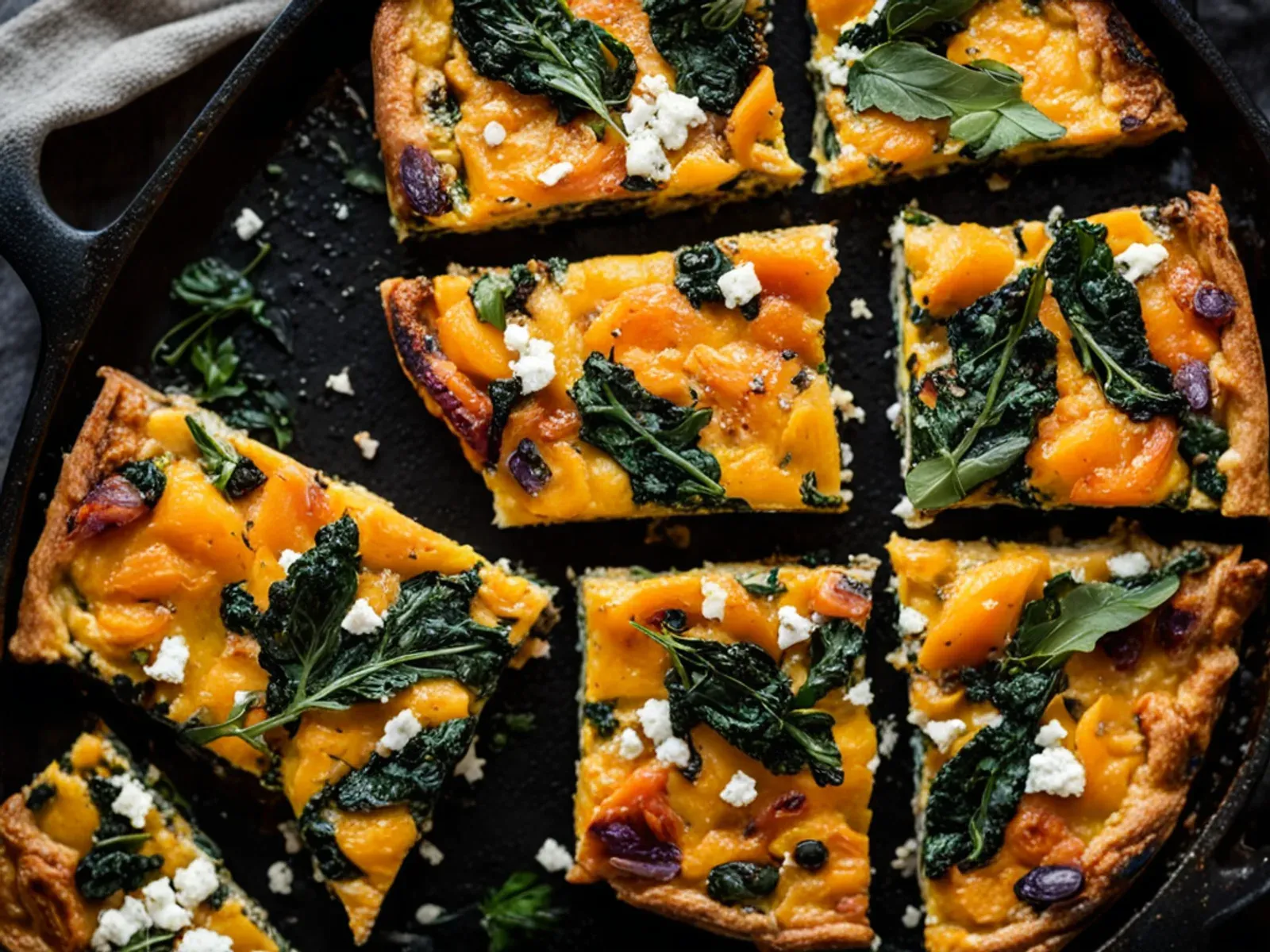
Roasted Butternut Squash Frittata with Kale, Feta and Sage is a vegetarian breakfast recipe made with butternut squash, olive oil, salt. It takes 60 minutes of hands-on time, plus 5 minutes resting, serves 6, and each serving has 280 calories, 15 g of protein and 2 g of fiber.
Roasting the squash first makes it caramelized and fully tender before it goes into the eggs. Frying the sage leaves in the skillet oil crisps them for a topping and also flavors the oil you cook the onion and kale in. Starting the eggs on the stove and finishing them in a moderate oven gives an evenly set, custardy center without a rubbery bottom.
Ingredients
Roasted squash
- 3 cups420 gbutternut squash, peeled and cut into 1/2-inch cubes
- 1 tbsp14 golive oil
- ½ tsp3 gsalt
Skillet
- 2 tbsp27 golive oil
- 12 4 gfresh sage leaves
- 1 medium110 gred onion, thinly sliced
- 2 cloves6 ggarlic, minced
- 4 cups84 glacinato kale, stems removed, leaves chopped
Eggs
- 10 large500 glarge eggs
- ¼ cup61 gwhole milk
- ¾ tsp4.5 gsalt
- ½ tsp1.2 gblack pepper
- 1 pinch0.2 gground nutmeg (optional)
- 4 oz113 gfeta, crumbled
- ¼ tsp0.5 gred pepper flakes, for serving (optional)
Kit: rimmed baking sheet, 10-inch oven-safe nonstick or well-seasoned cast-iron skillet, mixing bowl, whisk
Tips
- Cut the squash into even 1/2-inch cubes so it cooks through in the oven. Pieces that are too big can stay firm inside the frittata.
- Take it out while the center still jiggles a little. It keeps cooking as it rests, and overbaking makes it spongy and watery.
- If you are using cast iron, make sure the pan is well seasoned and coated with oil all the way up the sides so the eggs release cleanly.
- You can roast the squash up to 3 days ahead. Then the morning cook takes about 25 minutes.
Swap ideas
- Goat cheese instead of feta
- Creamier, tangier pockets and a little less salt.
- Baby spinach instead of kale
- Softer and milder. Wilts in under a minute, so add it right before the eggs.
- Sweet potato instead of butternut squash
- Denser and a bit sweeter. Roasts in about the same time.
- Unsweetened plain yogurt or half-and-half instead of milk
- Yogurt adds tang and half-and-half makes a richer, softer custard.
The numbers
Nutrition per serving
280kcal per serving
Everything else · 6 servings per recipe
- Saturated fat
- 6.2 g 31%
- Sugars
- 3.3 g
- Sodium
- 834 mg 36%
- Potassium
- 473 mg 10%
- Calcium
- 230 mg 18%
- Iron
- 2.4 mg 13%
- Vitamin C
- 30 mg 33%
- Vitamin B12
- 1.11 µg 46%
% Daily Value on a 2,000 calorie diet. Calculated from USDA FoodData Central values for each ingredient; optional ingredients are excluded. Estimates vary with brands and portions.
Sources: Squash, winter, butternut, raw, Oil, olive, salad or cooking, Salt, table, Sauge, fraîche (values from the Anses Ciqual 2017 table, as reproduced by laurentberta.com). No fresh sage entry exists in USDA FoodData Central., Onions, raw, Garlic, raw, Kale, raw, Egg, whole, raw, fresh, Milk, reduced fat, fluid, 2% milkfat, with added vitamin A and vitamin D, Spices, pepper, black, Cheese, feta
Method
Heat the oven to 425°F. Toss the squash cubes with 1 tbsp olive oil and 1/2 tsp salt on a rimmed baking sheet. Spread them in a single layer and roast, flipping once halfway, until fork-tender and browned at the edges, 20–25 minutes. Then lower the oven to 375°F.
While the squash roasts, whisk the eggs, milk, 3/4 tsp salt, pepper and nutmeg in a bowl until no streaks of white remain. Set aside.
Heat 2 tbsp olive oil in the skillet over medium heat. Add the sage leaves and fry until they darken slightly and stop sizzling, 30–60 seconds. Lift them out onto a paper towel; they will crisp as they cool. Keep the oil in the pan.
Add the red onion to the sage oil and cook, stirring now and then, until soft and lightly golden, 5–6 minutes. Stir in the garlic for 30 seconds, then add the kale and a pinch of salt. Cook until the kale is wilted and bright green, 2–3 minutes.
Stir in the roasted squash and spread everything evenly across the pan. Crumble half of the fried sage into the egg mixture, then pour it over the vegetables. Scatter the feta on top.
Cook on the stove over medium-low heat without stirring until the edges look set and opaque about 1/2 inch in, 3–4 minutes.
Move the skillet to the 375°F oven and bake until the center is just set and only jiggles slightly when you shake the pan, 12–15 minutes. A knife inserted in the middle should come out without any liquid egg (160°F).
Let it rest in the pan for 5 minutes, then loosen the edges with a spatula. Top with the remaining crispy sage and red pepper flakes, if using, and cut into wedges. Serve warm or at room temperature.
Storage: Let it cool, then refrigerate the wedges in an airtight container for up to 4 days. Eat them cold or at room temperature, or reheat at 325°F for about 10 minutes (or microwave briefly). Keep the crispy sage separate so it stays crisp. Freezing is not recommended because the squash and eggs turn watery.
Questions
- How much protein is in roasted butternut squash frittata with kale, feta and sage?
- Each of the 6 servings has 15 g of protein, 2 g of fiber and 280 calories, calculated from USDA FoodData Central values for every ingredient.
- Is roasted butternut squash frittata with kale, feta and sage vegan?
- No, it's vegetarian rather than vegan because it contains large eggs and whole milk and feta. Everything else in it is plant-based.
- How long does roasted butternut squash frittata with kale, feta and sage take to make?
- 15 minutes of prep and 45 minutes of cooking, so 60 minutes of hands-on time, plus 5 minutes of unattended resting.
- Can you make roasted butternut squash frittata with kale, feta and sage ahead?
- Let it cool, then refrigerate the wedges in an airtight container for up to 4 days. Eat them cold or at room temperature, or reheat at 325°F for about 10 minutes (or microwave briefly). Keep the crispy sage separate so it stays crisp. Freezing is not recommended because the squash and eggs turn watery.
- What can I substitute in roasted butternut squash frittata with kale, feta and sage?
- Goat cheese instead of feta — creamier, tangier pockets and a little less salt.. Baby spinach instead of kale — softer and milder. wilts in under a minute, so add it right before the eggs.. Sweet potato instead of butternut squash — denser and a bit sweeter. roasts in about the same time.. Unsweetened plain yogurt or half-and-half instead of milk — yogurt adds tang and half-and-half makes a richer, softer custard..
- Does roasted butternut squash frittata with kale, feta and sage contain gluten or nuts?
- None of the ingredients are a source of gluten, tree nuts or peanuts. That is a statement about the ingredient list, not a guarantee about the brands you buy — always read the labels if you're cooking for an allergy.
Nutrition is calculated from USDA data for every ingredient — how we work it out.
Published October 2, 2026 ·Italian-American