One-Pot Creamy Butternut Squash Pasta with Spinach, Sage and Toasted Walnuts
One pot butternut squash pasta where the squash melts into a silky, dairy-free sauce, finished with spinach, crispy sage and toasted walnuts. Ready in 40 minutes.
- Prep
- 15 min
- Cook
- 30 min
- Serves
- 4
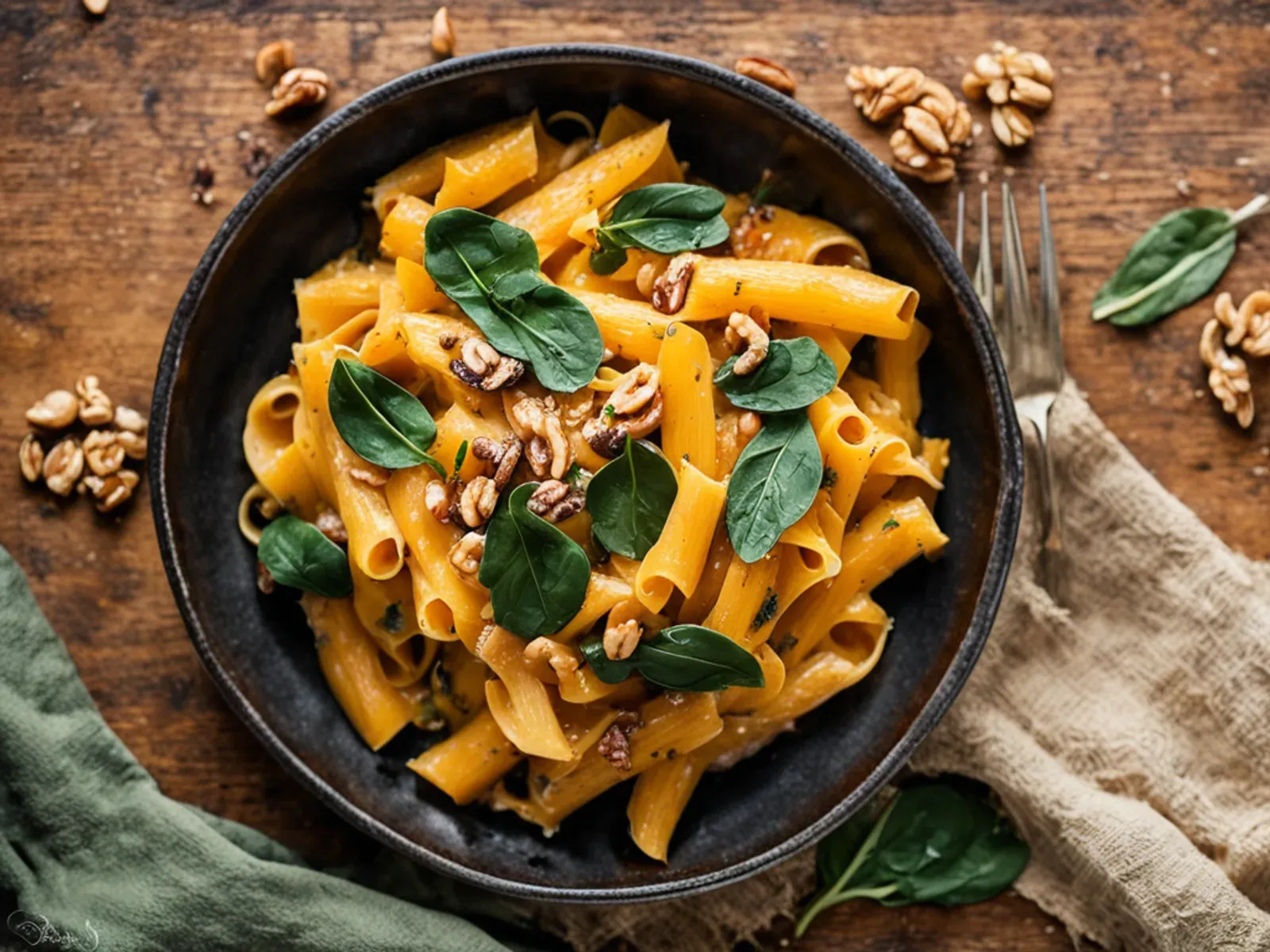
One-Pot Creamy Butternut Squash Pasta with Spinach, Sage and Toasted Walnuts is a vegan dinner recipe made with walnuts, olive oil, fresh sage leaves (about 20). It takes 45 minutes of hands-on time, serves 4, and each serving has 635 calories, 20 g of protein and 9 g of fiber.
You don't need a blender or a second pot here. Small cubes of squash simmer in broth until soft enough to mash, and then the pasta cooks right in that liquid, so its starch helps turn the squash into a thick, creamy sauce. The sage leaves are fried in the pot first, which gives you a crisp garnish and leaves sage-flavored oil to build the sauce on. Nutritional yeast and a squeeze of lemon supply the savory, tangy note you'd usually get from cheese.
Ingredients
- ½ cup59 gwalnuts, roughly chopped
- 3 tbsp41 golive oil
- ½ cup16 gfresh sage leaves (about 20), plus 1 tbsp finely chopped sage
- 1 medium110 gyellow onion, finely diced
- 4 cloves12 ggarlic cloves, minced
- 4 cups560 gbutternut squash, peeled and cut into 1/2-inch cubes (about 1 small squash)
- 4 cups960 glow-sodium vegetable broth
- 1 cup237 gwater, plus more as needed
- 12 oz340 gshort pasta, such as penne, rigatoni or fusilli
- 1 tsp6 gfine sea salt, plus more to taste
- 1 pinch0.2 gground nutmeg
- ¼ tsp0.5 gred pepper flakes
- ⅓ cup20 gnutritional yeast
- ½ cup120 gunsweetened oat milk (or other plain plant milk)
- 4 cups120 gbaby spinach
- 1 tbsp15 gfresh lemon juice
- ½ tsp1.2 gfreshly ground black pepper
Kit: large Dutch oven or wide heavy pot (5–6 quart), potato masher or sturdy wooden spoon, slotted spoon
Tips
- Cut the squash into small 1/2-inch cubes so it goes soft in about the same time it takes to cook the pasta. Bigger chunks stay firm and won't mash into the sauce.
- Keep stirring while the pasta cooks. The squash starch settles on the bottom and can scorch if you leave it alone.
- Brands of broth vary a lot in saltiness, so hold back on extra salt until the end, once the sauce has reduced.
Swap ideas
- Walnuts → toasted pumpkin seeds
- Makes the dish nut-free and gives it a lighter, earthier crunch.
- Baby spinach → chopped lacinato kale
- Gives a sturdier green with more chew. Stir it in with the pasta for the last 3 minutes so it softens.
- Oat milk → 2 tbsp cashew butter whisked into 1/2 cup water
- Makes a richer, silkier sauce with a gentle nutty flavor.
- Regular pasta → gluten-free penne
- Makes the dish gluten-free if you also use a gluten-free broth. Start checking it early and add liquid as needed, because GF pasta soaks up more and softens faster.
The numbers
Nutrition per serving
635kcal per serving
Everything else · 4 servings per recipe
- Saturated fat
- 2.7 g 14%
- Sugars
- 9.4 g
- Sodium
- 1357 mg 59%
- Potassium
- 1195 mg 25%
- Calcium
- 207 mg 16%
- Iron
- 6.2 mg 34%
- Vitamin C
- 44 mg 48%
- Vitamin B12
- 18.63 µg 776%
% Daily Value on a 2,000 calorie diet. Calculated from USDA FoodData Central values for each ingredient; optional ingredients are excluded. Estimates vary with brands and portions.
Sources: Nuts, walnuts, english, Oil, olive, salad or cooking, Sauge, fraîche (values from the Anses Ciqual 2017 table, as reproduced by laurentberta.com). No fresh sage entry exists in USDA FoodData Central., Onions, raw, Garlic, raw, Squash, winter, butternut, raw, Soup, vegetable broth, ready to serve, Beverages, water, tap, drinking, Pasta, dry, enriched, Salt, table, Spices, nutmeg, ground, Spices, pepper, red or cayenne, Nutritional Yeast Seasoning by BRAGG (fortified; legacy USDA Branded Foods entry as reproduced by NutritionValue.org), Oatly Original Oatmilk (Nutrition Facts per 1 cup / 240 ml: 120 kcal, 5 g fat, 0.5 g sat fat, 100 mg sodium, 16 g carbs, 2 g fiber, 7 g sugars, 3 g protein, 350 mg calcium, 0.3 mg iron, 390 mg potassium, 0.4 mcg B12). Converted to per 100 g assuming ~244 g per cup (density ≈ 1.02 g/mL); vitamin C not listed, treated as 0., Spinach, raw, Lemon juice, raw, Spices, pepper, black
Method
Toast the walnuts in the dry pot over medium heat, stirring often, until fragrant and a shade darker, 4–5 minutes. Tip them into a bowl.
Add the olive oil to the pot and heat until it shimmers. Add the whole sage leaves in a single layer and fry until they turn darker green and stop sizzling, 1–2 minutes (they crisp up as they cool). Lift them onto a paper towel with a slotted spoon, sprinkle with a pinch of salt, and keep the sage oil in the pot.
Lower the heat to medium, add the onion and cook until soft and translucent, 4–5 minutes. Stir in the garlic, chopped sage, nutmeg and red pepper flakes and cook until fragrant, about 1 minute.
Add the squash, 2 cups of the broth and the salt. Bring to a boil, then cover and simmer until the squash is tender enough to crush easily against the side of the pot with a spoon, 8–10 minutes. Mash about half the squash right in the pot, leaving some cubes whole.
Pour in the rest of the broth and the 1 cup water, then bring back to a boil. Stir in the pasta, pushing it under the liquid. Simmer uncovered, stirring every minute or two so nothing sticks, until the pasta is al dente and the liquid has turned into a thick, glossy sauce, 10–13 minutes. If the pot looks dry before the pasta is done, add splashes of hot water.
Turn off the heat. Stir in the nutritional yeast and oat milk, stirring hard so the remaining soft squash breaks down into the sauce. Add the spinach a handful at a time and fold it through until it wilts, about 1 minute.
Stir in the lemon juice and black pepper, then taste and add more salt if needed. The sauce thickens as it sits, so loosen it with a little hot water or plant milk until it's creamy. Serve topped with the toasted walnuts and crispy sage.
Storage: Once cool, refrigerate the pasta in an airtight container for up to 4 days. Store the crispy sage and walnuts separately at room temperature so they stay crunchy. The sauce thickens in the fridge, so reheat on the stove or in the microwave with a splash of water or plant milk. Freezing isn't recommended because the pasta turns soft.
Questions
- How much protein is in one-pot creamy butternut squash pasta with spinach, sage and toasted walnuts?
- Each of the 4 servings has 20 g of protein, 9 g of fiber and 635 calories, calculated from USDA FoodData Central values for every ingredient.
- Is one-pot creamy butternut squash pasta with spinach, sage and toasted walnuts vegan?
- Yes. It contains no dairy, eggs, honey or other animal products.
- How long does one-pot creamy butternut squash pasta with spinach, sage and toasted walnuts take to make?
- 15 minutes of prep and 30 minutes of cooking, so 45 minutes of hands-on time.
- Can you make one-pot creamy butternut squash pasta with spinach, sage and toasted walnuts ahead?
- Once cool, refrigerate the pasta in an airtight container for up to 4 days. Store the crispy sage and walnuts separately at room temperature so they stay crunchy. The sauce thickens in the fridge, so reheat on the stove or in the microwave with a splash of water or plant milk. Freezing isn't recommended because the pasta turns soft.
- What can I substitute in one-pot creamy butternut squash pasta with spinach, sage and toasted walnuts?
- Walnuts → toasted pumpkin seeds — makes the dish nut-free and gives it a lighter, earthier crunch.. Baby spinach → chopped lacinato kale — gives a sturdier green with more chew. stir it in with the pasta for the last 3 minutes so it softens.. Oat milk → 2 tbsp cashew butter whisked into 1/2 cup water — makes a richer, silkier sauce with a gentle nutty flavor.. Regular pasta → gluten-free penne — makes the dish gluten-free if you also use a gluten-free broth. start checking it early and add liquid as needed, because gf pasta soaks up more and softens faster..
- Does one-pot creamy butternut squash pasta with spinach, sage and toasted walnuts contain gluten or tree nuts?
- Yes — the ingredient list includes gluten and tree nuts, in some cases as an optional ingredient you can leave out. Check the labels on the products you buy if you're cooking for an allergy.
Nutrition is calculated from USDA data for every ingredient — how we work it out.
Published September 26, 2026 ·Italian-inspired